
US Data Centres After the Midterms: What the Election Means for AI’s Building Boom
US voters in Texas, Georgia and Ohio have elected governors who campaigned on tougher data centre rules. With power already scarce and demand at record highs, we look at what the midterms mean for AI’s building boom.

For the past few years, the AI story has been about money: how much the world’s largest technology companies are willing to spend, and how quickly. In 2026, that spending is projected to reach between US$803 billion and US$828 billion, much of it on the infrastructure that powers AI.
Increasingly, though, the harder question is whether that money can be deployed fast enough. Microsoft, for instance, lowered its spending outlook in 2026. It wasn’t for lack of demand. The third-party data centres it was relying on simply weren’t ready in time. Space that’s ready to use, and the electricity to run it, are becoming harder to find than the money to pay for them.
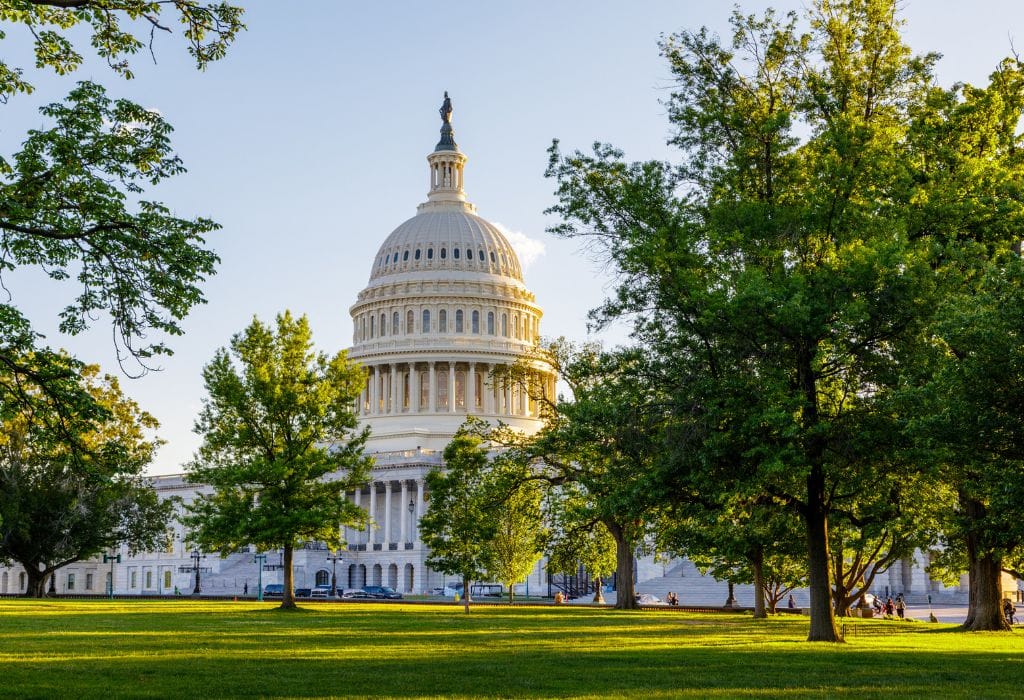
This isn’t a new problem in Asia, where hubs like Hong Kong and Singapore have long had to work within tight limits on land and power. The same pressure has been building in the US, the market that has driven much of the industry’s growth, and in the 3 November 2026 midterm elections, it picked up a new dimension — voters in Texas, Georgia and Ohio, three of the states drawing much of America’s new data centre development, elected governors who campaigned on pausing new projects or tightening the rules. Power was already deciding where America’s next data centres could go. Now politics may have a say too.
Demand That’s Hard to Keep Up With
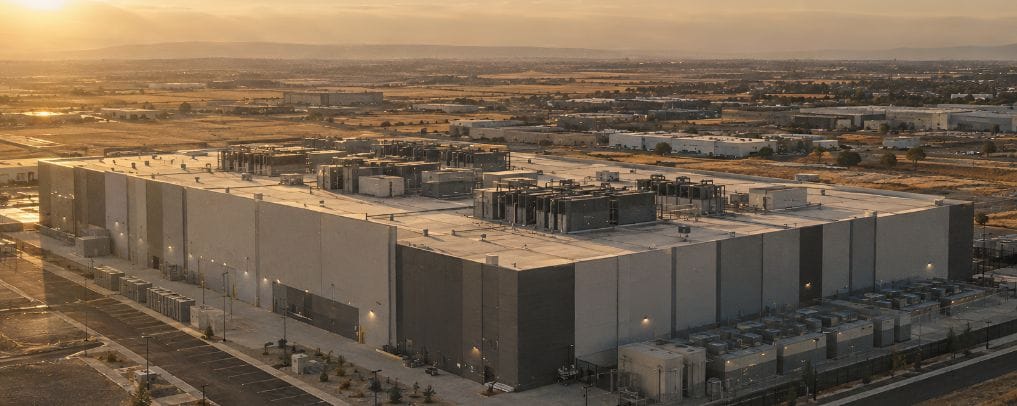
So far, the election hasn’t changed the demand side of the story. You can see it in how quickly space is being taken up. In the first half of 2026, North America absorbed a record 25 gigawatts of data centre capacity, roughly double the amount a year earlier. Data centres are usually measured by how much power they can draw rather than how big they are, which tells you a lot about what matters most in this business. It’s a very different way of valuing property from the square-foot thinking most of us are used to.
Very little of that space stays empty for long. Across North America, vacancy has hovered around 1% for three straight years, from 2024 to mid-2026. Even buildings that don’t exist yet are mostly pre-leased. Of the 66 gigawatts currently under construction, about 95% has already been committed to tenants, and companies signing leases today are often booking space that won’t be ready until 2028.
Rents have reflected that scarcity. Data centre rents have risen by nearly 70% since 2020, or about 9% a year on average.
Part of the reason supply hasn’t caught up is surprisingly basic. Often, putting up the building isn’t the hardest part. Getting it connected to the grid is.

Why Power Now Comes First
Northern Virginia shows the problem clearly. It’s America’s largest data centre market by a wide margin, and it’s almost completely full, with vacancy at 0.2%. You might expect developers to rush in and build more. Many would like to, but new projects there can wait more than three years just to connect to the grid.
It’s a similar story elsewhere. Utilities are struggling to build transmission lines as fast as demand is growing, and many contracts now require data centre tenants to commit to paying for 60% to 85% of the power they reserve, whether they end up using it or not. Power used to be something a developer arranged after picking a site. Now it’s often the first thing they look for, and sites with power already lined up have become increasingly sought after.
That’s pushing development well beyond the traditional hubs. According to JLL, 77% of the capacity currently under development is now in what it calls “frontier” markets. Among the energy-rich, build-friendly markets JLL highlights are West Texas and Ohio. Both states have just elected new governors who campaigned on tougher rules for data centres.
What the Midterms Changed
Texas, Georgia and Ohio aren’t minor players in this story. According to the research firm SemiAnalysis, Texas accounts for nearly 30% of the US data centre capacity expected to come online in 2028. Atlanta, having overtaken Northern Virginia, now has more capacity under construction than anywhere else in North America. And Columbus, Ohio, is one of the tightest markets in the country, with vacancy at around 0.1%.
All three states now have incoming governors who made data centres a campaign issue. In Texas, Gina Hinojosa called for an immediate pause on new approvals until state lawmakers address community and utility concerns, along with an end to data centre tax incentives. In Georgia, Keisha Lance Bottoms backed a moratorium on new construction. In Ohio, Amy Acton proposed a “conditional” moratorium, under which developers would have to meet a set of requirements before building.
The shift didn’t come out of nowhere, and it isn’t limited to one party. Even before the vote, Ohio had paused new applications for its data centre sales tax exemption in May 2026, and Texas’s outgoing Republican governor, Greg Abbott, had recommended repealing the state’s incentives in June 2026 and suspended some approvals.
How much actually changes is still an open question. The incoming governors are due to take office in January 2027, and much will depend on state legislatures. At the federal level, Democrats have won both houses of Congress, but with a presidential veto in play, sweeping national restrictions are seen as unlikely. Before the vote, Jefferies said a Hinojosa win would likely bring a statewide pause in Texas, and a Bottoms win could bring a temporary one in Georgia. Beyond that, some analysts expect the impact to be more measured than the campaign rhetoric suggests. Jefferies itself sees Texas’s next legislative session as more likely to raise costs and requirements than to materially restrict the pipeline.
Either way, the bar for new projects is rising. That puts the spotlight on the projects that have already met key requirements.

What Still Gets Built
Not every project faces the same risk. In Texas, GLJ Research estimates in its November 2026 note that about 13 gigawatts of capacity is immediately exposed, but expects projects that have secured power, permits and materials to keep moving. Those with power but no state environmental permits could be delayed by 12 to 18 months, and those with neither may look to other states, such as Louisiana or Oklahoma.
Anyone who has followed property development will recognise the logic. A plot of land with planning approval is usually worth more than the same plot without it, because the slowest and least certain part of the process is already done. Data centres increasingly work the same way. The difference is that the approvals that matter most are a grid connection and, increasingly, the support of state governments and local communities.
Tougher rules can also clear out weaker projects. In Ohio, after the main local utility required data centres to commit to paying for most of the power they reserved, projected new demand on its network fell from about 30,000 megawatts (MW) to around 5,700 MW, in addition to about 12,000 MW already under contract before the rules took effect. The utility says this filtered out speculative requests, though critics argue the original figure was never a realistic forecast and have taken the tariff to the Ohio Supreme Court. If the utility is right, stricter rules don’t always mean fewer real projects. They can simply filter out the ones that were never likely to be built.
There’s no sign yet that this is slowing demand, but it is changing who can meet it. Even projects that are already permitted and leased aren’t immune. Stricter rules on power and water use, or the loss of tax incentives, could push up costs for existing facilities too.

Factors Affecting Project Delivery
Beyond whether a project has its approvals in hand, a few other questions now carry more weight.
The first is how firm the power really is. It’s one thing for a site to have access to the grid, and another to know exactly how much has been secured and when it will be switched on. A project with a confirmed connection date is in a very different place from one still waiting in a queue.
The second is who has committed to using the space. With so much capacity leased before it’s even built, the strength of those tenants matters, whether they’re one of the large technology companies or a smaller operator.
Location still matters, but the definition of a good location has widened. Access to reliable, reasonably priced power remains essential. After the midterms, so does the political climate, at both state and local level, including how much say communities are likely to have over new projects.
And then there’s the question of incentives. Tax breaks helped draw data centres to many states, but several have already paused or scaled them back, and Texas’s incoming governor has pledged to end them. Projects that don’t lean heavily on incentives have less to lose if the rules change.
Where This Leaves the Market
So should the midterm results worry anyone watching US data centres? The short answer is that it’s too early to say how much will change, but the risks have clearly grown.
Demand looked strong going into the election. As of mid-2026, vacancy was around 1%, and the companies behind AI expect to spend more in 2027.
What has changed is how hard it is to meet that demand. Building a data centre in the US was already a race for power. Now it’s also a test of permission, from utilities, from state governments and, increasingly, from the communities nearby. Some projects will be delayed, some will cost more to build, and some may move elsewhere or not happen at all.
That makes the market more selective. Not every data centre will do well. Tenant demand can shift, incentives can be rolled back, and the new governors’ plans are still taking shape. Some analysts, including GLJ Research, expect the next wave of supply to be slower and harder to deliver, which could favour projects that have already cleared these hurdles. But secured power, approvals and tenants do not guarantee returns or protect against losses.
For the past few years, the big question was how fast America could build for AI. After the midterms, the more useful question is which projects will actually get built.
If you’re weighing how to get exposure to the sector, our guide to the four main routes into data centre investing explains what each one involves.
Sign up for a RealVantage account to explore the current deals. Viewing available opportunities does not constitute an offer or a recommendation to invest.
Everything described in this article reflects conditions at the time of writing and may change. Interest rates, currency, rents, occupancy and pricing can all move against an investor. Past performance is not indicative of future results. Nothing in this article constitutes investment advice, a recommendation, or an offer to buy or sell any investment.
About RealVantage
RealVantage (operating as RV SG Pte. Ltd. in Singapore) is a leading real estate co-investment platform, licensed and regulated by the Monetary Authority of Singapore (MAS), that allows our investors to diversify across markets, overseas properties, sectors and investment strategies.
The RealVantage team comprises professionals across real estate, corporate finance, technology, venture capital, and startup growth. The platform combines institutional deal sourcing with structured underwriting and portfolio diversification capabilities. The team is led by a distinguished Board of Advisors and advisory committee who provide cross-functional and multi-disciplinary expertise to the RealVantage team.
The company's philosophy, core values, and technological edge help clients build a diversified and high-performing real estate investment portfolio.
Get in touch with RealVantage today to see how they can help you in your real estate investment journey.
Disclaimer: The information and/or documents contained in this article do not constitute financial advice and are meant for educational purposes. Please consult your financial advisor, accountant, and/or attorney before proceeding with any financial/real estate investments.