
Investing in Data Centres: Understanding a Market That Does Not Behave Like Real Estate
For those thinking of investing in data centres: what data centres are, what drives them, who is in the value chain, and where they are being built.

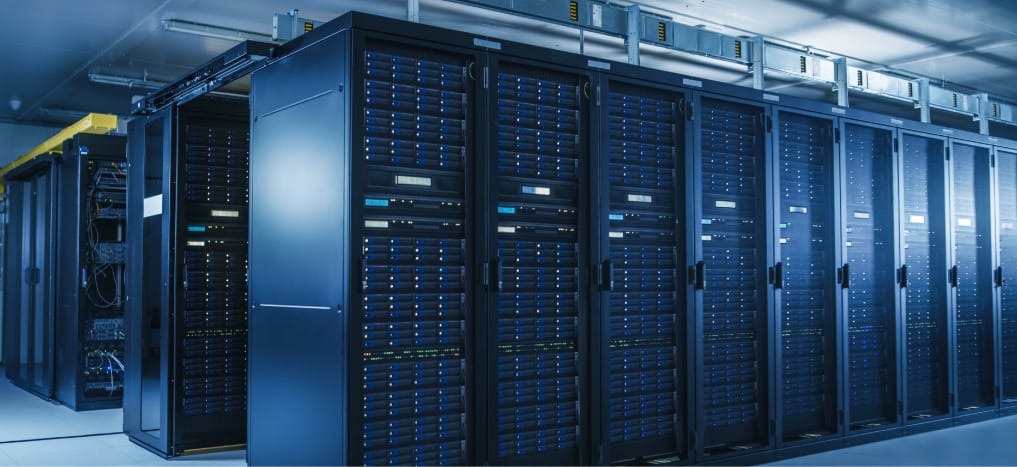
AI has turned data centres from a niche asset into one of the largest capital stories of the decade. For investors familiar with traditional real estate, the category looks approachable: buildings with tenants, lease agreements, and income streams.
However, the resemblance can be misleading, as data centres behave more like infrastructure than real estate. Investors who price them like office blocks will misread the entire market.
That single difference changes almost everything about how these assets are valued, leased, and risked.
This article explains the market for those thinking of investing in data centres: what data centres are, what drives them, who is in the value chain, and where they are being built. Note that the sector’s figures move quickly, and all figures below have an as-of date. The numbers are current as of the cited dates.
The demand story, why this is happening now
The technology engine
AI is the headline driver, but the structural nuance matters for investors. AI demand comes in two forms, and the difference matters as AI adoption happens rapidly around the world.
- AI Training is the process of building an AI model in the first place. It is enormously power-intensive, typically occurs in concentrated training runs, and is episodic rather than continuous.
- AI Inference is what happens every time someone uses that model: asking it a question, generating an image, running a query. Each individual use is far smaller than training, but it happens continuously, across millions of users, and it grows as adoption spreads.
AI represented roughly a quarter of data centre workloads in 2025. Inference is expected to overtake training around 2027, and AI could be about half of all workloads by 2030 (JLL, 2026). Training occurs periodically; inference generates ongoing demand. The shift from one to the other is what turns a one-off construction boom into steady, long-term demand for capacity.

The industries underneath the technology
AI is the engine. The industries adopting it are the transmission. Several demand drivers operate beneath the headline:
- Financial services. Sovereign-data and fintech rules in markets like Singapore push banks to keep primary data and backups in-country, a direct demand driver for locally anchored capacity.
- Enterprise cloud migration. Companies continue moving computing from owned on-premises servers to leased cloud and colocation. On-premises capacity is declining as this shift continues.
- Government and sovereign compute. National AI strategies and data-residency policies create demand that is policy-driven rather than purely commercial.
- AI-adopting sectors. Healthcare, Logistics, Autonomous Systems, and any industry embedding AI inference into its operations broaden the demand base as adoption spreads.
The growing demand from the above industries adopting AI is what makes the demand for data centres durable. A boom driven by one sector can reverse. Demand spread across banking, healthcare, logistics, and government is harder to switch off.
This is the most logical bear case, and it deserves a direct answer.
The concern: if chips and models become far more efficient and the same AI output needs a fraction of the power it once did, does demand for data centre capacity collapse?
The market has previously acted on this: when DeepSeek released a far cheaper model in January 2025, Nvidia fell about 17% in a day on exactly this logic (PIIE, Feb 2026). That represented roughly US$600bn of market value erased on the back of the efficiency-implies-less-demand thesis.
History suggests the opposite of what intuition predicts. When a resource becomes more efficient and cheaper to use, we tend to use far more of it, not less, and total consumption goes up rather than down. This is because the lower cost unlocks uses that were not economical before. Cheaper AI gets embedded in more places, and the new demand outpaces the efficiency saving. Economists refer to this as the Jevons paradox.
The evidence since DeepSeek supports this. Through 2025, the cost to hit a given AI benchmark fell dramatically, yet usage and revenue rose faster. AI-lab and cloud revenues grew sharply over the year (PIIE, Feb 2026). Efficiency arrived and demand still climbed.
The honest caveat: this is an observed historical pattern, not a law. It holds as long as cheaper AI continues to unlock new uses. If businesses run out of new things to do with it, this pattern stops protecting the sector.
There is a second point here that matters more for a property investor than for a technology investor. Efficiency improvements happen fastest in chips (Nvidia in recent years). Chip designers can make each new generation dramatically more capable, and the price of renting computing power has already fallen sharply more than once.
But you cannot make electricity, or a power grid, or a physical building, more efficient at anything like that pace. Grid connections take years. Substations take years. Buildings take years. So, when efficiency improves, the commercial impact may be felt first by compute hardware providers, while owners of power-constrained facilities often face slower structural change. A real estate investor sits at the layer that efficiency erodes most slowly.
That is reassuring, but it is not a guarantee. The entire demand story rests on one condition: AI demand must continue to convert into paid, occupied capacity.
If AI demand plateaus or disappoints, the assets most exposed are those built speculatively or operated without lease discipline. This is the risk that lands directly on the landlord layer.
What a data centre actually is
The product is power, not floor space
A data centre provides power, cooling, and connectivity to the computing equipment inside it. The building is the container. The product is the reliable delivery of electricity at scale to high-density hardware.
Rent in this sector is priced per kilowatt and not per square metre because the binding constraint is power, not area. A facility’s capacity is capped by the power it can draw and distribute.
To put a number on the premium that constraint commands: Singapore wholesale pricing was approximately US$330-475 per kW per month as of Q1 2026, which was the highest in Asia-Pacific at that time (CBRE, 2026).
Two main operating models
Colocation: multiple tenants lease dedicated space and power within a shared facility. Lease terms tend to be shorter and the offering more service-intensive.
Hyperscale or powered shell: a single large tenant, typically a major cloud provider, takes a whole facility or campus on a long lease. Build-to-suit arrangements are common here.
The lease is a hybrid contract
A data centre lease blends a real estate lease with a technology service agreement. The landlord goes beyond providing space and also guarantees power availability, cooling, connectivity, and uptime, often with financial penalties for breaching service levels.
This is the reverse of a traditional triple-net lease, where operating obligations sit with the tenant. Here, the operator carries ongoing service and operational obligations that a traditional commercial landlord typically does not.
How leases have changed at the market level: through much of the 2010s, the market was oversupplied and deflationary. Today, it is supply-constrained and landlord-favourable. Vacancy in major markets is very low, and leasing criteria have shifted from network density toward power availability (CBRE, 2026).

The value chain, who builds, owns, leases, and funds
“Data centres” is not one business. It is a chain of businesses stacked on top of one another, and each link makes money in a different way, with a different level of risk.
This matters because “I want to invest in data centres” is not actually a decision. It is a question.
Which part of the chain do you want to invest in? Owning the building? Supplying the equipment? Lending to the developer? Buying shares in the landlord? Each is a genuinely different investment with a different risk profile, and confusing them is the most common mistake newcomers make.
Here is the chain, from the ground up.
1. Power and land (the binding input)
This is where the chain begins. Grid access, power generation, transmission, and the land near them are the gating resources. Large asset managers have begun acquiring utilities and power assets to secure supply for data centre portfolios (e.g. BlackRock’s utility acquisitions, 2024-26).
2. Equipment and suppliers
This covers cooling systems, power distribution, generators, switchgear, and the compute hardware (GPUs, networking, etc.). Suppliers like Vertiv power and cool facilities without owning them. The chip layer (e.g. Nvidia) sits here and is the highest-margin part of the AI chain, but is a semiconductor business, not a real estate one.
3. Developers (build and energise)
Specialists who secure land and power and build facilities, either speculatively or on a build-to-suit basis. Many are private-equity-backed platforms (e.g. Stream Data Centers, backed by Apollo). This is the highest development-risk, highest-return layer in the stack.
4. Operators and landlords (own and lease)
The entities that own the stabilised, income-producing assets and collect rent. Global names include Digital Realty and Equinix as listed REITs. Regional operators include AirTrunk, DayOne, STT GDC, Bridge Data Centers, and Princeton Digital Group.
Hyperscalers also self-build, but still lease heavily.
5. Tenants (the demand)
Who pays rent: Hyperscalers (e.g. AWS, Microsoft, Google, Oracle, Meta), the Chinese clouds (e.g. Alibaba, ByteDance), and newer “neoclouds” — GPU-focused AI specialists (a new class of companies that rent out AI computing power).
Hyperscalers reach down into the operator layer through self-build. Their capex is the engine of this market, with top Hyperscalers’ combined AI and data centre spending estimated to run into the hundreds of billions of US dollars in 2026.
6. Capital (who owns the owners)
Private equity and infrastructure funds are the largest owners after big tech itself. Names active in the space are Blackstone, Apollo, KKR, and BlackRock, among others.
Public data-centre REITs are the listed route. New stabilised-asset REIT vehicles are being created as exit ramps for private capital (e.g. Blackstone’s data-centre REIT filing, 2026).
The investor takeaway:
The earlier you get involved, the more risk you take and the more you stand to make or lose. Building a facility before it has a tenant is risky and potentially very profitable. Owning a completed, fully-leased building is safer and pays a steadier, smaller return.
Neither is inherently better. They simply suit different investors and portfolio objectives. Where you sit in the stack determines what you are actually buying.

Where they are being built
Global concentration
The Americas accounts for about half of global capacity, with the US being the dominant single market by number of facilities. The UK, Germany, China, and France follow.
The binding constraint has shifted from land to power. Roughly half of global projects scheduled for completion face power-related delays, and site selection now follows grid access instead of geography. “Speed to power” is the dominant siting criterion. In plain terms, developers now choose sites based on how quickly they can get a large and reliable electricity supply. Some data centres are built in remote locations for no reason other than that power is available there and available soon.
Asia-Pacific is a fast-growing region, even as capacity is expected to grow globally through 2030 (JLL, 2026). Within the Asia-Pacific region, Southeast Asia has become a development hotspot.
The Singapore-Johor pairing is the most directly relevant illustration for investors in this region. It shows how power, land, and policy determine where capacity goes.
Singapore: the constrained premium hub. Singapore commands the highest data centre pricing and the lowest vacancy risk in Asia-Pacific. Growth is deliberately capped by sustainability policy and power allocation constraints (CBRE, 2026). The premium persists because of network density, connectivity, political stability, and the country’s role as a subsea-cable landing hub.
Johor: the explosive adjacent market. Initially absorbing Singapore’s overflow, it has matured into a regional hub. The scale is now substantial: 850MW completed, a further 1,800MW under construction, and 2,700MW in the pipeline, which places Johor Bahru among the top three growth markets in Asia-Pacific (JLL Malaysia, 2Q 2026).
The draw is straightforward. Johor has abundant land, and power and water are considerably cheaper than in Singapore. It has also developed a distinct character: Johor has become largely a build-to-suit market, with facilities constructed to the specifications of specific large tenants.
The investor lesson in the pairing: a constrained premium core beside a high-growth adjacent market, each with a different risk profile. The same AI-driven demand splits across two very different markets depending on power, land, and policy.
Why it is worth an investor’s attention
The forward picture
Global capacity for data centre real estate is widely expected to roughly double by 2030, with a multi-trillion-dollar investment cycle behind it (JLL, 2026). A projected shortage of AI-ready space supports the demand case.
The appeal for an investor is that long lease terms and investment-grade or otherwise strong-credit tenants can produce stable, infrastructure-like income streams. What that means in practice: the income tends to look more like the payments from a toll road or a utility than the rent from an office block: long contracts, large and financially strong tenants, and revenue tied to an essential service rather than to a fashionable location.
That is the appeal often cited for data centre investments. It is also, as the next section makes clear, only half the picture.
The real risks, put plainly
Power is both the sector’s asset and its principal constraint. Project delays from grid limitations are common and growing. Obsolescence happens far faster than in traditional property, and it works differently. An office block that falls out of fashion can be refurbished. A data centre built for one generation of computing equipment can find that the next generation needs far more power per rack and more aggressive cooling than the building was designed to deliver.
The building is not worn out. It is simply the wrong shape for what the market now wants to put inside it, and that is much harder to fix. This is one of the defining risks of the asset class.
Data centres are a real asset class with real tailwinds and real sector-specific risks. They reward investors who understand they are not buying traditional real estate.
Understanding the market is the first step
Understanding that data centres behave like infrastructure rather than real estate is the starting point. From there, the questions that matter shift: from rent per square metre to rent per kilowatt, from lease expiry to power guarantee, from comparable sales to value-chain position.
Pricing a data centre asset requires a different framework from pricing a commercial property. The standard metrics, such as capitalisation rate on floor area or triple-net lease comparables, are not the right tools here. For investors who want to understand why, our piece on capitalisation rate, IRR, and discount rate explains how the metrics work for traditional real estate. It should set the context for understanding where the data centre market departs from them.
Understanding the market is the first step to potential data centre investment. Pricing and participation are where the analysis gets harder, and they are the subjects of two companion pieces in this series.
Data centres are one part of the broader commercial real estate that institutional investors have held for years, alongside offices, logistics, and other assets. RealVantage gives individual investors access to that same institutional-grade opportunity: vetted residential, commercial, and industrial real estate deals across six major markets — Australia, Hong Kong, South Korea, Singapore, the UK, and the US. Sign up for a free account with RealVantage to explore the available opportunities.
About RealVantage
RealVantage (operating as RV SG Pte. Ltd. in Singapore) is a leading real estate co-investment platform, licensed and regulated by the Monetary Authority of Singapore (MAS), that allows our investors to diversify across markets, overseas properties, sectors and investment strategies.
The RealVantage team comprises professionals across real estate, corporate finance, technology, venture capital, and startup growth. The platform combines institutional deal sourcing with structured underwriting and portfolio diversification capabilities. The team is led by a distinguished Board of Advisors and advisory committee who provide cross-functional and multi-disciplinary expertise to the RealVantage team.
The company's philosophy, core values, and technological edge help clients build a diversified and high-performing real estate investment portfolio.
Get in touch with RealVantage today to see how they can help you in your real estate investment journey.
Disclaimer: The information and/or documents contained in this article do not constitute financial advice and are meant for educational purposes. Please consult your financial advisor, accountant, and/or attorney before proceeding with any financial/real estate investments.