
The Cliff in a Data Centre’s Value: Why Specification Obsolescence Shapes Who Can Invest
Data centres are valued on the power they can deliver, not the floor space they contain. This article goes a step further, and asks what that fact does to the market itself: who can invest, who cannot, and why.


A data centre can be three years old, fully leased, and in excellent physical condition, and still be worth far less than it cost to build in the first place.
Nothing has gone wrong with the building: the roof does not leak, and the tenants are paying. What has changed is the equipment the market now wants to put inside it, and the building was designed for the last generation of that equipment rather than the current one.
This is the central pricing problem of the asset class, and it has almost nothing to do with wear and tear. It has everything to do with the data centre's technical specification.
Readers of the first piece in this series will know that data centres are valued on the power they can deliver, not the floor space they contain. That reframing is now widely understood. This article goes a step further, and asks what that fact does to the market itself: who can invest, who cannot, and why.
The argument unfolds in four steps.
- A data centre's specification can become obsolete suddenly rather than gradually. The value falls off a cliff instead of sliding down a slope.
- The only reliable way to make such a building financeable, or worth investing in to build, is to hand that risk to somebody else, and the instrument that does it is a long lease with a large tenant.
- The tenant who accepts that risk gains the leverage, and takes a growing share of the value, increasingly through ownership rather than tenancy.
- Whatever risk is left over still must be priced by someone, and pricing it requires expertise most property investors do not have. That is why this market belongs to specialists.
The shift you have already read about
If you have read anything about data centre investment in the past year, you will have met the core reframing already. These assets are valued on the power they deliver, measured in megawatts, rather than on the space they occupy. Rent is quoted in dollars per kilowatt per month. Development cost is often discussed in terms of the cost per megawatt of IT load (the power delivered to the computing equipment itself, as distinct from cooling and other overhead) that the facility can deliver. The tenant is buying guaranteed electricity.
This is now well established, so any serious analysis of the sector starts here. The one thread worth carrying forward is this: if power is the value driver, then whatever consumes and manages that power determines whether the asset keeps earning at today’s rates. That means factors such as cooling architecture, rack density (how much computing equipment a given space can accommodate and power), and interconnect design (how servers are connected for high-speed networking) are critical. Power is the input, and specification is what turns that input into revenue.
The distinction matters because specification changes faster than buildings do. A facility’s shell can last decades. The systems that make it useful to a given generation of hardware typically cannot. That gap between a durable structure and a shorter-lived specification is where conventional property valuation stops working.
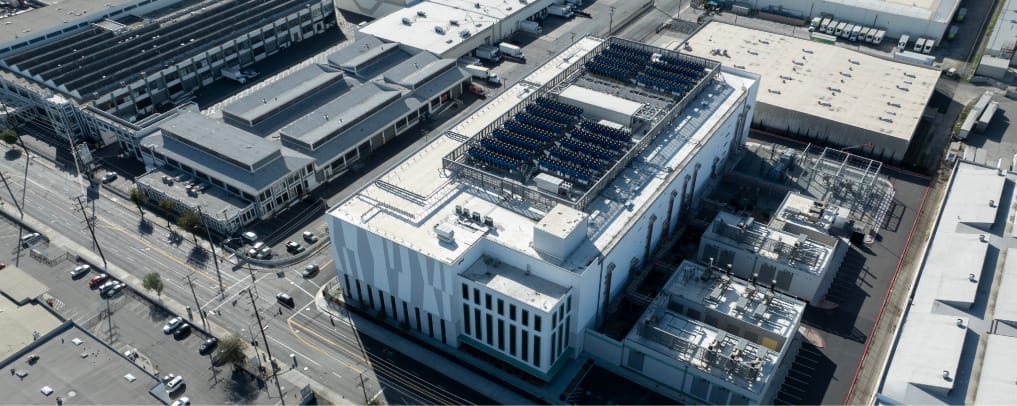
Specification obsolescence is a cliff, not a slope
Traditional real estate obsolescence is gradual. An office building ages, its finishes date, and it needs periodic refurbishment over decades. Value erodes on a slope that owners can see coming and budget for.
Data centre obsolescence is a cliff, not a slope. A facility built around one power density, one cooling method, or one interconnect design can abruptly lose its suitability for current workloads without anything visibly going wrong.
The closest everyday comparison is this: Imagine a factory built for one product line, at scale. The factory is structurally sound. The machines still run. The roof is fine. But the market has now decided it does not want the product that the factory was designed to produce. No amount of maintenance changes that. To make the factory valuable again, you would have to rebuild the inside to produce whatever new product is in demand.
A data centre can fail in exactly this way. The shell is sound. What sits inside it is wrong for what the market now wants to run.
The technical reasons are unforgiving. Retrofitting liquid cooling to a facility designed for air cooling can require substantial changes to mechanical systems, piping, floor loading, and plant infrastructure, rather than a straightforward equipment swap. The networking architecture that large AI clusters depend on is often planned into the facility from the outset, and extensive retrofits may be technically difficult or economically unattractive once the building is operational.
The result is a facility that can look strong on every conventional measure — fully let, physically sound, professionally managed — and still carry the wrong specification for the rents that justified its price.
A headline megawatt figure does not reveal any of this. And this is not a theoretical risk. Two features of the current market show the cliff is already visible in how these assets are priced.
The comparables problem
Traditional property valuation leans on comparable transactions: what did similar buildings nearby sell for? Data centres offer very few comparable transactions. The sector is young; transaction data sits scattered across broker reports and internal systems rather than in any standardised public record, and two facilities of similar size are often not comparable at all.
A higher-specification facility in one market tells you little about a lower-specification one elsewhere, even if both were built the same year. Comparable sales alone are often an unreliable valuation tool.
The stranded-enterprise-asset story
Many older enterprise data centres that come to market today were originally built for corporate owner-occupation rather than third-party leasing. As those companies shifted their computing to the cloud instead, they were left holding facilities they no longer need.
Buyers often seek substantial discounts to replacement cost. Sellers typically spent far more than the market will now pay. The result is a wide and persistent gap between what sellers will accept and what buyers will offer, and many of these buildings sit unsold because of it.
They look valuable measured against what they cost. They look far less valuable measured against what they can earn. The difference is specification and demand, not a construction defect.
The investor takeaway: The dangerous data centre is rarely the one that already looks distressed. It is the one that looks strong on paper while carrying a specification the market is about to stop paying a premium for.

The anchor lease as the risk-transfer instrument
If value can fall off a cliff whenever the specification moves, no lender or equity investor can back a data centre on the strength of the building alone. The specification risk has to go somewhere. Someone must be willing to hold it.
The instrument that does this is the long anchor lease. A creditworthy tenant, typically a Hyperscaler, signs a long build-to-suit commitment tied to this specification.
In plain terms: a very large and financially solid tenant, usually one of the major cloud companies, often commits to a lease of ten or twenty years on a building constructed to their exact requirements. If that building's technology looks dated by year seven, it is now their problem rather than the owner's. They are contracted to keep paying either way.
The risk has not disappeared. It has changed hands. This is why lease length in this sector tracks technology cycles so closely.
The buildings themselves have economic lives of 30 to 50 years. Major mechanical, electrical, and cooling systems typically require significant upgrades or replacement over much shorter cycles, often within roughly 10 to 20 years depending on technology and operating intensity. Those two timelines do not match, and the mismatch is the whole problem.
A 15-year lease is what bridges them. It converts a specification that might be obsolete halfway through into a contracted, predictable income stream for the full term. The owner is no longer betting on the technology. They are relying on the tenant's contracted commitment.
Lenders behave accordingly. In data centre lending, the length of the lease, the financial strength of the tenant, the terms on which they can walk away, and what happens at renewal all carry more weight than the factors that dominate conventional property lending, such as location and the quality of the building finish. The lender is not really underwriting a building, in the sense of assessing and pricing the risk of committing capital. They are underwriting a promise to pay.
This is also what makes the asset financeable at all. A pre-committed tenant is what allows REITs, infrastructure funds, and banks to fund construction in the first place. Without that commitment, the specification risk remains largely with the developer. Many lenders and investors will be reluctant to finance the project until that risk has been allocated and reflected in the economics.
One point of accuracy is worth making here, because it is often blurred. The dominant mechanism is the lease, not an equity stake. The tenant commits to pay rent for a long period; they do not, in most cases, buy a share of the building.
Tenant equity and joint-venture arrangements are a real and growing pattern, and the next section deals with them. But they sit on top of the leasing model rather than replacing it.

Whoever absorbs the risk captures the value
Risk and reward travel together. The party that takes on a deal's largest risk holds the leverage in the negotiation, and the pricing reflects it.
In a data centre deal, that party is the anchor tenant. They are the one absorbing the specification risk, and they are compensated for it.
That compensation shows up first in the lease itself: better rents, better terms, more control over how the building is designed and run. Increasingly, it shows up as ownership. Many of the largest cloud providers now combine leasing with self-development and direct ownership, building and holding facilities directly, or taking equity positions and leasing the space back to themselves rather than simply renting from a landlord.
The valuation model is shifting with them, from a landlord-and-tenant framework toward something closer to a company owning its own factory. For an independent owner or developer, this raises an uncomfortable question. If the tenant has taken the specification risk and been paid for taking it, what exactly is left?
The answer is the residual. It is everything that happens at the end of the lease: whether the building can be let again, what it is worth if it cannot, and what it would cost to modernise the specification for whoever comes next.
The owner is paid for holding that residual, through a higher yield than a safer asset would offer. But it is a real risk, and it is worth being precise about what it actually is. It is the same specification-obsolescence risk from the start of this article. The lease did not remove it. It was postponed, then handed back to the owner at expiry.
This is the point that generalises, and it is the most useful thing an investor can take from this piece. In every data centre deal, somebody is holding the risk that the building becomes obsolete.
The tenant holds it during the lease. The owner holds it at the end. The lender prices it into the loan. It never disappears. It only moves. So the question to ask of any data centre investment is not whether the risk exists. It always does. The question is: who is holding it, and am I being paid to hold it?
Why generalist capital is locked out, and what that means for access
Specification obsolescence behaves like a cliff. The anchor lease transfers that risk for its term. The tenant who absorbs it captures the value and, increasingly, the ownership. What is left behind — the residual specification risk and the re-leasing risk at lease-end — still needs pricing.
That residual is why generalist real estate capital, including ordinary property investors and funds without specialised power or data-infrastructure expertise, is largely absent at the asset level. Judging whether a specification will still be commercially viable at lease-end, what the facility is worth if it is not, and whether refresh economics works is not a generalist real estate underwriting question.
It requires technical and power-market expertise that most real estate investors have not needed to build. CBRE Investment Management notes that while both real estate and infrastructure investors participate in the sector, real estate investors have tended to concentrate on lower-complexity data centre investments. Infrastructure investors are generally more active across projects with greater operational and technical complexity.
This is why the field narrows to niche infrastructure funds and digital specialists with technical operating partners, often alongside Hyperscaler equity or joint-venture participation. The market is specialised because the risk is specialised. What can look like a structural quirk of the data centre market is, in practice, the specification-obsolescence problem made visible in who is permitted to invest.
For an investor, the practical question is not whether the sector is attractive, but how to gain exposure to assets whose value depends on risks most individual investors are not equipped to price alone. That is the subject of the final piece in this series. The role a platform can play is to bring that underwriting to the investor rather than asking the investor to supply it.
RealVantage exists to bring institutional-grade underwriting to individual investors, across property types where that expertise typically is not accessible to retail investors, data centres being a clear example. Sign up for a free account to explore the vetted opportunities currently on our platform.
About RealVantage
RealVantage (operating as RV SG Pte. Ltd. in Singapore) is a leading real estate co-investment platform, licensed and regulated by the Monetary Authority of Singapore (MAS), that allows our investors to diversify across markets, overseas properties, sectors and investment strategies.
The RealVantage team comprises professionals across real estate, corporate finance, technology, venture capital, and startup growth. The platform combines institutional deal sourcing with structured underwriting and portfolio diversification capabilities. The team is led by a distinguished Board of Advisors and advisory committee who provide cross-functional and multi-disciplinary expertise to the RealVantage team.
The company's philosophy, core values, and technological edge help clients build a diversified and high-performing real estate investment portfolio.
Get in touch with RealVantage today to see how they can help you in your real estate investment journey.
Disclaimer: The information and/or documents contained in this article do not constitute financial advice and are meant for educational purposes. Please consult your financial advisor, accountant, and/or attorney before proceeding with any financial/real estate investments.