
How to Invest in Data Centres: Four Routes, and What Each One Asks of You
There are a few ways to invest in data centres, from listed REITs to private infrastructure funds. Each comes with its own trade-offs in liquidity, minimum investment, and what you're actually exposed to. Here's what each route asks of you.

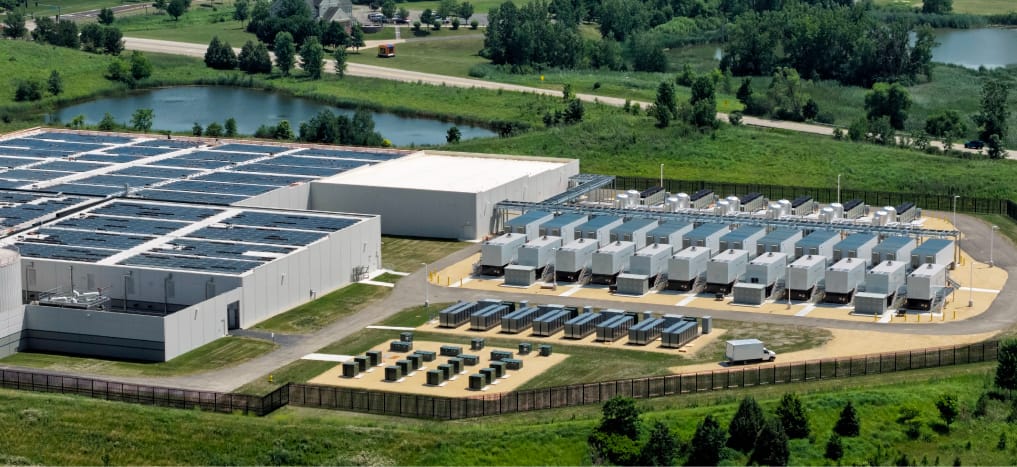
The first article in this series set out what data centres are as an asset class, and followed the value chain from land and power through to the finished, leased building. The second explained why pricing data centres as assets is difficult, and why a specification that stops matching demand can undermine value.
The natural next question is a practical one: How does an individual investor actually gain exposure to data centres?
Access to the sector has changed. The listed market has long been available to investors through brokerage accounts, while new fund structures have made parts of the private market more accessible to individual investors.
This means the challenge is no longer simply access. Investors also need to assess what they are actually buying and how the underlying investments are being valued. A product carrying the data centre label may hold relatively little data centre real estate, while access to a private fund does not by itself indicate whether its underwriting is sound.
This article describes four routes into data centre investing and the trade-offs associated with each.
One note: availability, minimums, and eligibility differ by market, and they change over time. Every figure here is current as of the date cited, and all of it should be checked at the time of investment.
The four routes
Route 1: Listed data centre REITs
A listed REIT, or real estate investment trust, owns income-producing property and its shares or units can be bought and sold on an exchange.
The pure-play universe, meaning REITs that focus primarily on data centres rather than a mix of property types, is relatively small. This matters because a pure-play REIT provides more direct exposure to data centres, while a diversified REIT spreads exposure across different property types. The holdings therefore matter more than the label alone. In the U.S., the two large listed REITs most directly focused on data centres are Equinix and Digital Realty. Equinix is the larger of the two and operates a global platform across dozens of metropolitan markets around the world.
For a Singapore-based reader, the relevant name is closer to home. Keppel DC REIT listed on the Singapore Exchange in December 2014 and was the first pure-play data centre REIT in Asia.
As at 31 March 2026, it had approximately S$6.3 billion of assets under management and a portfolio of 25 data centres across 10 countries. Asia Pacific accounted for 84.7% of AUM, with Singapore representing 62.7%.
Investors are buying a share of a diversified, professionally managed portfolio of completed buildings. These assets are generally stabilised, meaning they are built, leased, and producing income. Because the shares trade on an exchange, investors also have daily liquidity.
Investors receive income through distributions. The trade-off is that these portfolios generally hold completed and leased assets rather than projects under construction, so they provide less exposure to the development premium described in the first article.
This route may be more suitable for investors who prioritise liquidity and income over exposure to earlier-stage development opportunities.

Route 2: Thematic ETFs, and the label problem
An ETF or exchange-traded fund is a single listed fund that holds a basket of companies. Investors buy and sell it like a share, and one purchase gives exposure to many companies at once.
The fund's holdings are particularly important here. A fund with the words “data centre” in its name may hold relatively little data centre real estate.
The VanEck Data Center Supply Chain ETF holds real estate at roughly 3.5% of its portfolio, for example. The bulk sits in semiconductor manufacturers, chip designers, and energy companies. It is worth contrasting this with another widely held option, the Global X Data Center & Digital Infrastructure ETF. That fund holds roughly half its portfolio in real estate, with its largest positions in data centre and tower REITs including Equinix, Digital Realty, American Tower and Keppel DC REIT (Global X / fund data, 2026). It is classified as a real estate sector fund, though it also holds digital infrastructure companies outside property.
Both funds carry data centre branding. One is majority real estate. The other holds almost none. The only way to know which you are buying is to read the holdings.
The actual fund exposure has different characteristics and therefore presents different risks and rewards to the portfolio you are looking to build.
Two further trade-offs are worth stating. The first is concentration. Many of these funds hold only a few dozen companies, so performance depends heavily on a small number of positions. The second trade-off is cost. Thematic funds generally charge more than broad-market index funds.
Which investor this route suits depends entirely on which fund. Some offer genuine property exposure; others offer the broader AI infrastructure theme. Investors should therefore look past the label and assess what the fund actually holds.
Route 3: Equipment, chip, and power equities
This is the “picks and shovels” layer described in the first article. It includes companies that supply cooling systems, power distribution equipment, computing hardware, and electricity generation.
Rather than investing in the data centre itself, investors are gaining exposure to the companies that supply the infrastructure and equipment required to build and operate these facilities.
The power component is also relevant given the growing electricity demand from data centre development. Some generators now sign long-term power purchase agreements directly with technology companies. That gives them contracted forward revenue tied to data centre demand.
This route provides exposure to technology and energy companies rather than real estate itself. It therefore has different characteristics and risks from a property investment, including the efficiency risks discussed in the first article.
This route may be more suitable for investors seeking exposure to AI infrastructure growth rather than property income. It should be viewed as an investment in technology and energy companies rather than as a form of real estate investing.

Route 4: Private infrastructure funds, and what actually changed
Access to this route has changed most significantly in recent years. Until recently, private infrastructure funds were generally difficult for individual investors to access, partly because of their high minimum investment requirements.
Evergreen and semi-liquid structures have broadened access to some private infrastructure strategies. An evergreen fund is a perpetual fund. It takes in money continuously rather than in a single closed round. It also offers limited redemption windows instead of locking capital up for a decade. Semi-liquid ones allow investors to withdraw at set times, within limits, rather than freely. Minimum investment requirements vary significantly by vehicle, share class, jurisdiction and distribution channel.
Several large managers now run such vehicles with infrastructure or digital infrastructure mandates. Brookfield’s semi-liquid infrastructure income strategy invests across sectors that include data. EQT’s evergreen fund invests across its platform, including a newly launched AI infrastructure strategy. Hamilton Lane’s private infrastructure fund gives individual investors access across infrastructure sectors with limited quarterly liquidity.
There is an honest caveat that most coverage skips – the liquidity is real, but capped. These funds typically allow redemptions each quarter, often limited to around 5% of NAV. NAV is net asset value, or the fund’s total assets minus its liabilities, divided across its shares.
These limits are part of how the structure manages liquidity. When redemption requests exceed the permitted amount, investors may not be able to withdraw their full investment at that time. Stress in private credit during early 2026 provided an example of this, with redemption requests at some funds exceeding their quarterly limits.
This route may be suitable for investors seeking exposure to assets earlier in the development chain and able to accept limited liquidity and a longer investment horizon.
What each route actually costs you
The four routes line up on a few dimensions that matter. Put side by side, they show a pattern.
What access does not change
The first two articles established an important point. A data centre’s value can fall when its specification stops matching what the market wants to run. Assessing that risk requires technical and power-market expertise that generalist property investors may not have.
Greater access to private funds does not remove that problem. Instead, the investor relies on the fund manager to assess the underlying assets and their associated risks.
That is the sentence worth remembering: investors in these evergreen vehicles inherit the same manager selection, valuation, and incentive questions that institutions employ whole teams to answer.
At the listed end, the same principle applies in a different way. A fund with “data centre” in its name may provide significant exposure to semiconductors or other parts of the technology supply chain rather than data centre real estate. Investors therefore need to assess the underlying holdings rather than relying on the product name.
The nature of the decision has therefore changed, but the need for judgement remains. As discussed in the second article, specification risk does not disappear from a data centre investment; it is allocated between different parties. At the investment-product level, investors face a similar issue: the focus shifts from assessing the underlying asset directly to assessing the structure, manager, or companies providing the exposure.
The key is to understand what you are investing in and which risks you are taking on.

A note on access from Singapore
For Singapore-based investors, the most directly accessible route is through the local exchange. Keppel DC REIT has been listed on SGX since 2014, and is a pure-play data centre REIT with a majority-Singapore portfolio.
Global listed options, both REITs and thematic funds, are generally reachable through international brokerage accounts. The usual matters apply, and are worth checking: currency, withholding tax treatment, and platform availability.
Private and evergreen fund vehicles are typically distributed through private banks, wealth platforms, and intermediaries. Eligibility differs by jurisdiction and by investor classification. Some vehicles are available in Asia Pacific, and some are not.
One caveat closes this. Availability, minimums, and eligibility change. Anything specific should be checked at the time of investing, rather than taken from an article.
Questions to consider before investing
The analysis results in a short set of questions applicable to any of the four routes.
- What do I actually own?
A share of data centre properties, a basket of technology companies, or an interest in a fund that owns underlying assets. - Where in the chain does this sit?
Is the exposure to completed and leased assets, assets under development, or companies supplying the data centre industry? - Who is carrying the specification risk, and am I being paid to carry my share of it?
See our note on pricing in risk and performing deal analysis. - If this is a fund, what am I relying on the manager to get right?
What evidence is there that the manager has the expertise and track record to do so? - When can I get out?
What happens if redemption or selling activity increases significantly at the same time?
Access to the sector has become easier, but investors still need to assess the underlying opportunity and the risks involved. This is where a platform can add value: by assessing the underwriting behind an opportunity, the parties carrying the key risks, and whether the investment structure provides the intended exposure to the underlying asset.
These considerations apply beyond data centres. They are also part of the due diligence we apply to the opportunities we bring to investors. Sign up for a free account to explore the vetted opportunities currently on our platform.
The vehicles named in this article are illustrative of the route types described. They do not constitute investment advice, a recommendation, or an offer to buy or sell any investment.
About RealVantage
RealVantage (operating as RV SG Pte. Ltd. in Singapore) is a leading real estate co-investment platform, licensed and regulated by the Monetary Authority of Singapore (MAS), that allows our investors to diversify across markets, overseas properties, sectors and investment strategies.
The RealVantage team comprises professionals across real estate, corporate finance, technology, venture capital, and startup growth. The platform combines institutional deal sourcing with structured underwriting and portfolio diversification capabilities. The team is led by a distinguished Board of Advisors and advisory committee who provide cross-functional and multi-disciplinary expertise to the RealVantage team.
The company's philosophy, core values, and technological edge help clients build a diversified and high-performing real estate investment portfolio.
Get in touch with RealVantage today to see how they can help you in your real estate investment journey.
Disclaimer: The information and/or documents contained in this article do not constitute financial advice and are meant for educational purposes. Please consult your financial advisor, accountant, and/or attorney before proceeding with any financial/real estate investments.