
Japan's Record Run in Real Estate: What's Driving It, and What It Means for Investors
Japan's property market just posted a second straight record year — but record volumes, a weak yen and rising rates do not tell you where the actual opportunity is. We put the three most common claims about Japan real estate to the test, and the findings are not what the headlines suggest.

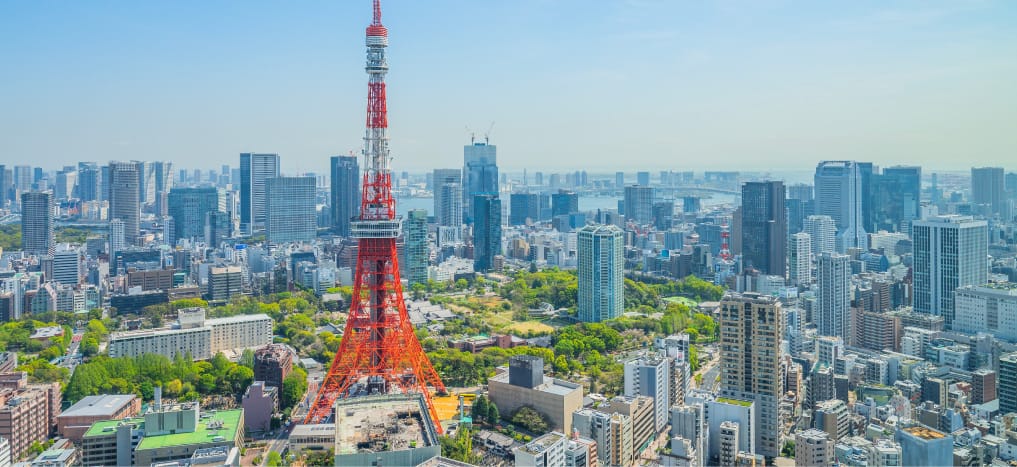
Japan's real estate investment market is on track for a second consecutive record year, with foreign capital forming a significant part of recent activity. Investment volume is forecast to reach ¥7 trillion, about US$44 billion, in 2026, after a record first half of ¥3.8 trillion (Bloomberg, Aug 2026).
Several factors have been cited to explain this performance. Rather than repeat those reasons or dispute them, this article takes the three common claims most often made about Japan property investment, examines the evidence for each, and asks what each one means for an investor looking at the market.
The claims have some support, but their implications differ across property sectors and investment strategies. Understanding those differences is more useful than treating Japan as a single investment market.
One note before we start: this is a live market, so every figure below is current as of the date cited, but conditions can move quickly. The currency and interest rates in particular may have shifted by the time you read this.
Claim 1: Japan is at record investment levels, with heavy foreign participation
Let us start with the claim that is simplest to check: Japan is at record investment levels, and a large share of the capital is foreign.
The evidence supports it clearly. The ¥7 trillion forecast for 2026 would be a record for the second straight year, and the ¥3.8 trillion first half was itself a record.
The prior year was already a record: commercial real estate investment reached ¥6.5 trillion in 2025, up 31% year on year and about 20% above the previous all-time high set in 2007 (CBRE, Feb 2026).
Much of the recent volume has come from offices. Companies are relocating and selling property to pursue asset-light strategies, holding less real estate directly on their own books.
The buyers competing for these assets are often very large. The proposed sale of Sankei Building, the property arm of broadcaster Fuji Media Holdings, drew bids from major investment firms such as KKR, Blackstone, and Goldman Sachs. Several offers exceeded ¥1 trillion or about US$6.3 billion (The Japan Times, Jun 2026).
Here is where the claim is narrower than it sounds. Record volume measures how much capital is transacting, not how attractively priced the entry is. Headline volume records are often a sign of competition rather than value.
There is also the question of who is doing the buying. When major institutions are competing for the most visible trades, individual investors may have limited access to those opportunities or face competition from buyers with different capital resources and investment mandates.
Much of the Tokyo real estate investment volume currently sits in office towers and large corporate asset sales. These are institutional in scale and not practically reachable for most individual investors.
So, the strength of the market is real and worth taking seriously. However, “the market is at record volumes” is not by itself an investment case.
Instead, it describes where capital is going, not where value is. The more useful question is which parts of this market are both structurally supported and realistically within reach.
Claim 2: The weak yen is what makes Japan attractive
The second claim is that Japan is attractive mainly because a weak yen makes entry cheap for foreign buyers. This one has real substance and it needs the closest examination.
The yen has been historically weak for several years. For a foreign buyer, that genuinely reduced the cost of entry in their home currency.
A weaker yen, relatively low borrowing costs through much of the 2020s, and continued foreign investment have all supported demand in Tokyo’s prime residential market (Property Access, Jul 2026).
Policy has also moved towards normalisation. The Bank of Japan decided on 18 September 2026 to raise its policy rate to 1.25%, effective 24 September (Reuters, 2026), its highest level in roughly 31 years (Trading Economics, Sep 2026). The increase follows the 1.0% rate reached in June (CNBC, 2026) and reflects continued attention to inflationary pressures.
Currency can influence foreign buyers, but transaction volume alone does not tell us how much of the investment activity it drove.
Institutional research also points to corporate asset sales and demand for properties with income growth potential (JLL, Aug 2026; CBRE, Aug 2026). That does not rule out currency as a factor in a buyer's decision. A frequently cited 19.0% foreign-buyer estimate concerns newly supplied condominiums in Chiyoda, Minato and Shibuya in a developer survey, not Japan's real estate transactions as a whole (Mitsubishi UFJ Trust and Banking, Sep 2025).
What does this mean for an investor? An investment thesis that relies heavily on a favourable exchange rate carries a meaningful currency component alongside its property exposure.
That can be a reasonable position, but it behaves differently. Its result depends on where the exchange rate sits when you exit, not only on what the asset earns. An entry justified by rents and occupancy still carries currency exposure for a foreign investor. Two investments with similar yen-denominated property performance can produce different home-currency returns by the day of sale.
The practical question is how much of the expected return comes from the asset's yen-denominated income, and how much depends on the exchange rate at entry and exit. A favourable entry rate cannot substitute for sound property economics.
Claim 3: Rising rates are a threat to Japanese property
The third claim is the most intuitive: rising interest rates are a threat to Japanese real estate. Higher rates raise borrowing costs, which reduces what buyers can pay and puts pressure on values.
That is a reasonable default and it holds in many markets. Japan is now raising rates after decades of near-zero policy, so the concern is natural.
However, the evidence complicates that picture. Rising rates have so far not dissuaded investors, even as inflation has returned to the economy (Bloomberg, Aug 2026). The policy rate reached 1.0% in June 2026, and the market still delivered a record first half, though the half closed before the September increase.
For residential property, the impact can vary across segments. Higher mortgage costs may make homeownership less affordable for some households, potentially supporting rental demand.
CBRE notes that the continued upward trend in interest rates should serve as a long-term driver of rental housing demand. Investment in rental housing also reached a record ¥904.3 billion in 2025, drawing both domestic and foreign investors (CBRE, 2026).
The mechanism is worth stating plainly. Rates are rising because inflation has returned after decades of deflation, and that same inflation is what is lifting rents. The rate rise and the rent rise share a common cause. That is why the two do not automatically offset.
This is not unlimited. The claim still holds at the extreme. Financing costs do bite and a sharp or sustained move would hurt. A commentary on the Tokyo market notes that while the upward trend is expected to continue, the pace of growth could slow if interest rates rise further (Property Access, Jul 2026).
So the signal for an investor is not the direction of rates on its own. It is whether the asset’s income can rise with inflation.
An asset on a long fixed lease with heavy borrowing is exposed when rates rise, because the income cannot move but the financing cost can. An asset whose rents reprice regularly in an inflationary economy can absorb the increase, and may benefit from the same conditions producing it.
The relevant test is whether net operating income can grow enough to offset higher costs and support the price paid.
What the three claims point toward
Pull the three threads together: the market is strong but competitive, asset income and entry price matter more than the currency headline, and what matters through a rate-rising cycle is whether income can rise with inflation.
Together, these point away from chasing price appreciation at record levels and toward assets where the rent is doing the work. That leads to one particular part of the market.
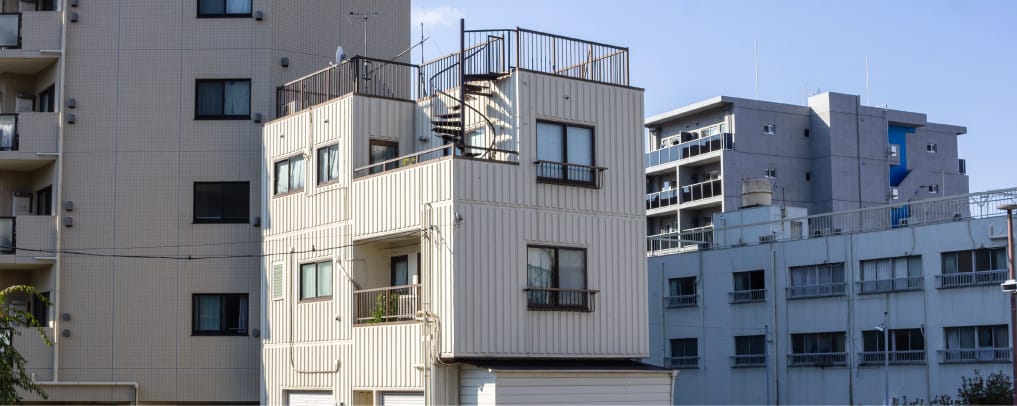
That part is the rental and multi-family segment. Multi-family here means residential buildings held as a single investment and let to many tenants, rather than individual units sold off separately.
CBRE reports that residential rent growth is accelerating across many Japanese cities, particularly for family units. Wage growth is becoming more established, which may help some households absorb measured rent increases if gains outpace living costs. Higher home prices and mortgage costs may also keep more households renting. In urban submarkets where tenant demand is strong and competing rental supply is limited, this could support occupancy and gradual rent growth (CBRE, Mar 2026; Bank of Japan, Jun 2026).
A thoughtful reader will already be forming a conclusion here, so it is worth naming directly. Given constrained supply and rising rents, it is tempting to conclude that any well-located supply should perform well with limited downside.
The first half of that is largely right. The second point requires caution.
The following supply and pricing data concern new for-sale condominiums, not rental stock. They illustrate pressure in parts of Tokyo's housing market, but cannot establish rental-building entry prices, yields or vacancy.
New for-sale condominium supply across the Tokyo area fell to 7,989 units in the first half of 2026. This was the second-lowest on record and the third straight year below 10,000 (The Japan Times, Jul 2026). For the full fiscal year 2025, Greater Tokyo supply of 21,659 units was the lowest since records began in 1973 (Housing Japan, Apr 2026).
But prices are at record levels too. The 23-ward average new condo price rose 9.1% to a record ¥142.49 million in the first half of 2026, the fourth consecutive year that first-half prices topped ¥100 million (Japan Times, Jul 2026).
Fiscal 2025 also saw an 18.5% rise to ¥137.84 million, with per-square-metre prices having risen for 14 straight years (Housing Japan, Apr 2026).
Scarcity can support demand, but it does not protect the price you pay. Entry price still matters to your return. The case for a rental asset is strongest when realistic income supports the entry price without relying on further price appreciation. Condo price records make valuation discipline relevant, but the actual test must use comparable rental assets.
If you want a framework for that, our guide on how to analyse a real estate investment deal before investing works through it in detail.
Tokyo luxury real estate as a separate case
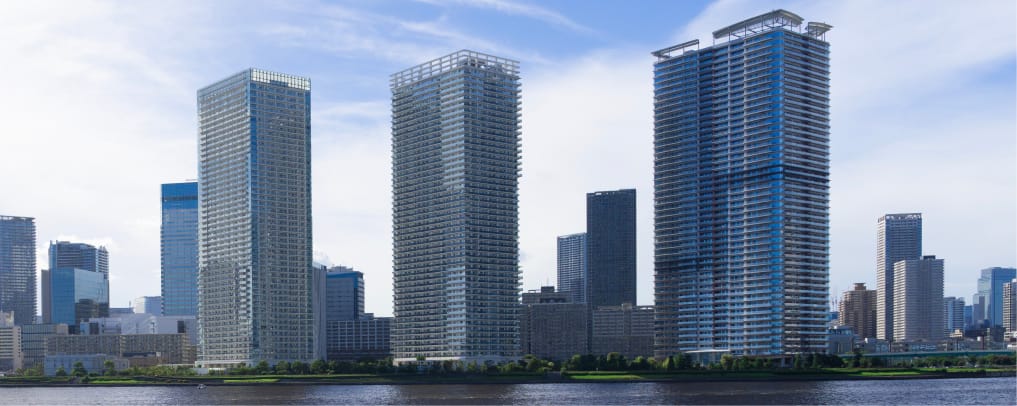
Prime and luxury Tokyo deserve to be treated as a distinct segment, not simply as the same market at a higher price.
The mainstream residential case rests on affordability pressure pushing households into renting. The Tokyo luxury real estate case rests on something different: scarcity of prime supply, land constraint and international demand.
The scarcity is physical. The most expensive residential land in Japan, in Minato’s Akasaka 1-chome, rose 20.5% to ¥7.11 million per square metre as of 1 January 2026, holding its top position for a ninth year. Meanwhile, Minato-ku residential land overall led wards at 16.6% (Koukyuu, 2026).
Higher construction costs constrain new supply, but they do not set a floor under resale values. The scarcity is in the land, not the building. There is no mechanism by which more of it appears. That is a different kind of constraint from one that a developer can build through.
The developer survey cited earlier estimated a 19.0% foreign-buyer share for new condos in Chiyoda, Minato and Shibuya, versus 12.7% elsewhere in the 23 wards. These are survey estimates for new condos, not all luxury property transactions.
The honest counterweight has to be present too. Luxury is more exposed to international capital flows and to sentiment among a smaller pool of buyers, which can turn faster than domestic rental demand.
Part of that headline growth in Tokyo residential prices is composition rather than pure appreciation, as the averages are heavily skewed by luxury towers in central wards. There, a shrinking number of launches sell at ever-higher prices (Tokyo Portfolio, 2026).
The clearest illustration came in July 2026, when the 23-ward average new condominium price jumped 96% year on year to ¥265.2 million in a single month, driven largely by high-end launches in Minato (BigGo Finance, 2026).
In 2025, the first-month contract rate for new condominiums in the Capital Region eased to 63.9% from 66.9% in 2024 (Global Property Guide, 2026).
Prime locations may benefit from limited supply, but a smaller buyer pool and changes in financing appetite can still weaken exit values.
The point is that luxury answers to a different set of forces from rental housing, an example of the distinction between income and appreciation discussed in our real estate debt versus equity guide.
What it means for you, and RealVantage
The most useful way to leave this is with questions rather than conclusions. Which part of the Japanese market am I actually looking at? Is my return case built on currency, or on income? Can this asset’s income rise with inflation? Am I paying a record price without enough income or downside protection?
The general principle underneath all of that is straightforward: a country is not an investment. Japan contains several markets with different drivers, and the case that holds for one does not automatically hold for another.
Foreign buyers can generally purchase property in Japan, subject to applicable reporting and property-specific rules, but the ease of buying says nothing about which segment is right for a given investor.
Distinguishing between these cases is difficult from a distance, and it is where most of the work sits. It means understanding which part of a market an opportunity belongs to, what is actually driving its income, and whether the entry price reflects the conditions rather than the headlines.
That is the work behind sourcing and assessing opportunities, and it is the information an investor needs to judge whether an opportunity fits what they are trying to do. This is the standard we apply to the opportunities we bring to our own investors on the RealVantage platform. Selected Japanese rental housing is therefore worth a closer look where achievable rents, limited competing rental supply and a sensible entry price support the income case.
Sign up for a free account with RealVantage to explore our curated, vetted property deals and more.
About RealVantage
RealVantage (operating as RV SG Pte. Ltd. in Singapore) is a leading real estate co-investment platform, licensed and regulated by the Monetary Authority of Singapore (MAS), that allows our investors to diversify across markets, overseas properties, sectors and investment strategies.
The RealVantage team comprises professionals across real estate, corporate finance, technology, venture capital, and startup growth. The platform combines institutional deal sourcing with structured underwriting and portfolio diversification capabilities. The team is led by a distinguished Board of Advisors and advisory committee who provide cross-functional and multi-disciplinary expertise to the RealVantage team.
The company's philosophy, core values, and technological edge help clients build a diversified and high-performing real estate investment portfolio.
Get in touch with RealVantage today to see how they can help you in your real estate investment journey.
Disclaimer: The information and/or documents contained in this article do not constitute financial advice and are meant for educational purposes. Please consult your financial advisor, accountant, and/or attorney before proceeding with any financial/real estate investments.