
Hotel-to-hostel Conversions in Hong Kong Mark the Birth of a Genuine Asset Class
After six years of decline, Hong Kong real estate is drawing institutional capital again, and student housing is leading the way. We examine the demand gap, the policy push behind it, and why execution, not demand, will decide which investors come out ahead.


SINGAPORE, Oct. 15 2025 / EdgeProp /From 2020 until recently, Hong Kong was a hard sell. Its borders stayed largely shut through the pandemic, and travel with mainland China did not fully resume until Feb 6, 2023.Interest rates climbed, and the city’s property market went through a six-year correction that began in late 2019, driving down the values of offices, retail properties and warehouses.
Today, capital is returning to Hong Kong, and one of the clearest signals is coming from an unlikely sector: student accommodation.
Hong Kong has set out to become Asia’s education hub, but its universities now admit more students from overseas and mainland China than they can house.
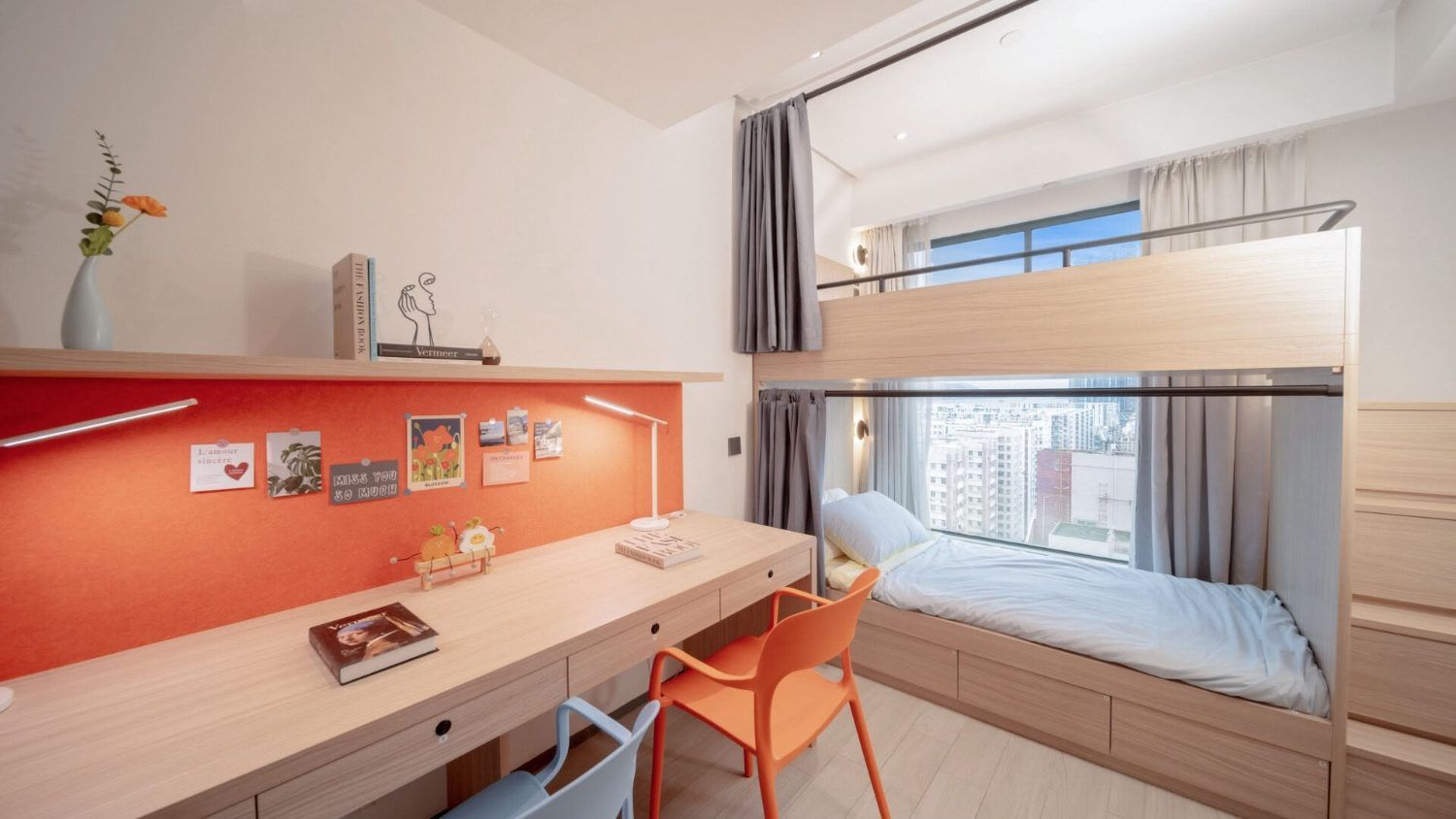
To fill the gap, investors are buying hotels built for tourists and turning them into student hostels. Singapore’s CapitaLand Investment is among those pursuing the opportunity, with a proposed HK$2.3 billion ($380 million) deal for one such hotel.
Our view is simple: Student housing in Hong Kong has the makings of a lasting asset class, not just a passing trade. But what is driving the rush of capital, what returns can investors realistically expect, and where should they exercise caution?

Why investors stayed away
Before I get to why student beds are suddenly in demand, it helps to rewind a little. Why did so many investors walk away from Hong Kong in the first place?
Office values fell by about half from their 2018 peaks, while retail values declined by around 42%. Financing also became harder to secure. A CBRE survey ranked Hong Kong as the toughest major market in the region for raising property debt, while lending across Asia Pacific, excluding Japan, fell to a 16-year low in the first half of 2026. For many investors, sitting on the sidelines was the easier choice.
Hotels had problems of their own. Tourists returned, with 49.9 million arrivals in 2025. But they spent less than they used to. Overnight visitors spent HK$5,503 each in 2025, down from HK$6,614 in 2018. Day-trippers spent roughly half what they did before, while hotel room rates also came under pressure.
According to CBRE, average hotel room rates fell 11% y-o-y in early 2025.For hotel owners, the search for a more reliable source of income was becoming increasingly urgent. As it turned out, another sector was facing a very different problem: demand was growing faster than supply.
Study, stay, work
Hong Kong wants to attract young talent and keep it. In September 2025, the Hong Kong government announced that the non-local student quota at publicly funded universities would rise from 40% to 50% from the 2026/2027 academic year.
The pitch is simple: Come to Hong Kong to study, then stay on to work. We regard this as one of the more coherent approaches to talent recruitment and retention in the region. It also gives the student accommodation sector a source of demand that does not depend on a recovery in the office market.
Hong Kong’s universities provide another draw. In the QS World University Rankings 2027, published in June 2026, the University of Hong Kong was placed 11th and the Chinese University of Hong Kong 18th. It was the first time two Hong Kong universities had ranked among the world’s top 20.
This year, Hong Kong overtook the US as the second most popular overseas study destination for students from mainland China. Hong Kong approved more than 94,500 student visas last year, more than double the number in 2022, according to an August 2026 article by Propmodo.
The challenge is finding accommodation for these students, as the supply of beds has failed to keep pace with demand.
Hong Kong had about 192,000 university students in the 2024/2025 academic year, but only around 44,000 hostel beds. That works out to more than four students for every bed, although not all students require hostel accommodation, and estimates of the actual shortfall vary. Savills puts the gap at around 88,000 beds, while JLL estimates a shortage of 76,300 beds in 2026, widening to 147,200 by the 2029/2030 academic year.
Regardless of the methodology, the shortfall is substantial. Private purpose-built student accommodation (PBSA) has barely made a dent in the shortage, with only about 6,900 beds currently available and another 16,300 in the pipeline.
Rents tell a similar story. According to JLL, stabilised rents range from HK$7,000 to HK$10,000 per bed per month, or approximately $1,150 to $1,650. Student accommodation rents in Hong Kong have risen by 10% annually since 2022, while major developments are reporting occupancy rates of 98% to 100%.Such strong demand has not gone unnoticed by investors.
When hotels become hostels
In July 2025, the Hong Kong government introduced the Hostels in the City Scheme, making it easier to convert hotels and other commercial properties into student accommodation.
To us, this is what good policy design looks like: removing regulatory obstacles rather than simply handing out subsidies. If demand is the fuel, the scheme provides the spark.
Under the Hostels in the City Scheme, a hotel converted into student accommodation remains classified as non-domestic. Owners can therefore avoid the lengthy rezoning and floor-area cuts that a switch to residential use would normally bring. In most cases, there is also no change to the land lease and no extra land premium to pay, potentially avoiding one of the biggest costs in a Hong Kong redevelopment.
The owners moved fast. By February 2026, the scheme had 25 applications covering about 5,100 beds. By September, 41 applications covering around 10,800 beds had been deemed eligible, reflecting the pace of investor interest.
Hotels led the way because they could be converted relatively quickly. They were already configured as rows of small rooms, and conversions typically take two to six months, compared with six to 18 months for offices. Faster conversion means rental income can begin flowing sooner.
What strikes us most is not the pace but the breadth of the buyer pool. In March, China Resources Longdation, part of a mainland state-owned group, paid HK$953 million for Hotel COZi Oasis in Kwai Chung, which will hold about 900 beds.
That same month, Centaline, best known as one of the city’s biggest property agencies, bought the 494-room Regal Oriental for HK$1.52 billion. Banks subsequently competed for a HK$1 billion financing mandate for its conversion.
Local developer Wang On teamed up with US private equity firm Angelo Gordon on Sunny House, a 720-unit conversion that is currently 98% occupied. In September, Singapore’s CapitaLand Investment moved to buy the 550-room ibis Hong Kong Central & Sheung Wan for HK$2.3 billion, one of the largest bets on the sector yet.
For such a young sector, the breadth of capital flowing in is striking. Mainland Chinese state-owned groups, local property agencies and banks, US private equity firms, and now one of Singapore’s largest real estate managers are pursuing opportunities in the same market.
But with so much money chasing these assets, the obvious question is: What kind of returns can investors actually expect?
What investors can expect
The answer depends very much on the asset. Industry estimates provide a useful benchmark, but they are no guarantee of actual returns.
JLL’s research estimates that office-to-student accommodation conversions could achieve target internal rates of return of 15% to 18% over a five-year holding period, compared with 13% to 16% for hotel conversions. These are target returns, however, and actual performance will depend on rental income, occupancy rates, operating costs and the eventual sale price.
Much of the appeal lies in the nature of the income. Nick Tang, CEO and executive director of Wang On, describes student housing as offering “stable and predictable income”.
Lenders appear to recognise that appeal, too. Bank of China (Hong Kong), for instance, reportedly competed against Industrial Bank’s Hong Kong branch and other lenders for the HK$1 billion loan mandate for the Regal Oriental conversion.
When banks compete to lend in a market where property financing is otherwise difficult to secure, it tells us they see something attractive in the underlying income. I think that is significant. But the competition for selected deals should not be mistaken for a broader recovery in property lending.
The UK offers a glimpse of what a mature student housing market looks like. Investors poured GBP2.1 billion ($3.56 billion) into UK PBSA in the first quarter of 2026 alone. Knight Frank puts prime London net initial yields at around 4.5%, compared with 5.25% to 5.5% in regional markets.
Hong Kong is still some way from that level of market maturity. That early stage is part of the appeal. It is also where much of the risk lies.
The risk of arriving late
Every property boom eventually reaches a point where early investors have made their money and latecomers risk paying too much. Hong Kong’s student housing market may not be there yet, but the warning signs are worth watching.
The first is price. Colliers senior director of hotel advisory Shaman Chellaram has cautioned that the remaining opportunity is “diminishing quite quickly” as more capital pours into the sector. More bidders mean higher acquisition prices, and higher entry costs mean thinner returns.
Then there is the question of how much demand each property can realistically capture. The citywide shortage is real, but so is the rush to fill it.
A shortage across Hong Kong does not mean every building will benefit equally. Students generally prefer to live near campus, and accommodation an hour away is a harder sell.
The pipeline of 16,300 beds is more than double the existing purpose-built supply. Even developers acknowledge “a real probability of oversupply in the next few years”. Oversupply in the wrong locations and scarcity in the right ones can easily co-exist.
Then there is policy risk. Much of the increase in demand has been driven by Hong Kong’s decision to admit more non-local students, alongside mainland Chinese families increasingly viewing the city as an alternative to the US.
But policies change, and so do family choices. If either shifts, the flow of incoming students could slow.
I do not expect demand to reverse, but I would be cautious about assuming today’s rental growth and occupancy rates will continue indefinitely. In a more crowded market, realised returns could drift towards the lower end of expectations, with a widening gap between winners and losers.
This is an operating business
If there is one point I want investors to take away, it is this: Owning student housing is closer to running a business than simply collecting rent.
Rooms turn over every academic year, so occupancy must be rebuilt annually.Student welfare, community, safety and university relationships all influence whether beds are filled at the projected rents. In mature markets, the difference between strong and weak operators is reflected directly in net operating income.
In Hong Kong, where the sector is still young and operating track records are limited, I believe choosing the right operator may be just as important as choosing the right building, if not more so.
Prudent investors should therefore test whether their investments remain viable if rental growth slows, occupancy falls or operating costs rise. Stability is the product of good operations. It does not come with the title deed.
The Hostels in the City Scheme also comes with restrictions. Converted properties must reserve at least 90% of their places for eligible students, limiting operators’ flexibility to accommodate other tenants if student demand weakens.
That restriction does not undermine the investment case, but it is another reminder that these assets cannot simply be treated as conventional rental properties.
The real test is the exit
The exit matters as much as the entry. Yet while much of the market is focused on getting in, I am more interested in the exit.
According to Real Estate Asia, buyers today are predominantly family offices, private investors, private equity funds and state-owned enterprises. Pension funds, insurers and sovereign wealth funds are expected to follow, but only once assets have matured and established a track record.
That institutional participation could ultimately broaden the buyer pool, improve liquidity and help establish long-term pricing for the asset class.
Hong Kong is still at the beginning of that journey. If it follows even part of the UK’s path, early investors holding well-located, professionally managed and stabilised assets could benefit as institutional capital enters the market and yields compress.
If that institutional demand fails to materialise, however, investors could find themselves holding an operating business with a limited pool of potential buyers, in a market where refinancing remains difficult.
For anyone buying today, the eventual sale may depend on whether larger institutional investors are willing to pay for the income stream that has been built.
That is why asset selection matters so much. Institutions typically seek assets with proven operating histories, and building that track record takes years of sustained occupancy and reliable income.
The properties that institutional investors may eventually want to own are being selected, developed and operated today. Not every hostel will make the cut.
What Singapore investors should take from this
For Singapore investors, student housing offers a way to participate in Hong Kong’s recovery without betting on a rebound in offices or retail.
Hong Kong’s hotels were built for a city of tourists. Many are now being repurposed for a growing population of students. That shift says something about the city’s ability to adapt its existing real estate to changing demand.
The timing is worth noting. CapitaLand’s move shows that major Singapore investors are no longer merely watching this emerging sector from the sidelines.
Hong Kong is close and familiar, and its property market has been through years of repricing. Student housing offers exposure to a different source of demand, supported by the city’s education policies, internationally ranked universities and shortage of accommodation.
With more capital chasing opportunities in the sector, investors will need to be increasingly selective. Location matters, particularly proximity to universities and transport links. So does the track record of the operator, and whether the acquisition price still makes financial sense if rental growth slows or stalls.
I believe student housing has the makings of a lasting asset class, not a passing investment trend. But not every conversion will succeed, nor will every investor achieve the returns being projected. Those who do best will need conviction and discipline in equal measure.
For much of the past five years, the question was whether Hong Kong was worth the risk at all.Today, the question is narrower and more useful: Which beds, where, and at what price?
Investors who answer that carefully may find that one of Hong Kong’s newest asset classes becomes one of its most enduring investment opportunities.

Keith Ong is the co-founder and group CEO of RealVantage, a Singapore-based real estate co-investment platform regulated by the Monetary Authority of Singapore
About RealVantage
RealVantage (operating as RV SG Pte. Ltd. in Singapore) is a leading real estate co-investment platform, licensed and regulated by the Monetary Authority of Singapore (MAS), that allows our investors to diversify across markets, overseas properties, sectors and investment strategies.
The RealVantage team comprises professionals across real estate, corporate finance, technology, venture capital, and startup growth. The platform combines institutional deal sourcing with structured underwriting and portfolio diversification capabilities. The team is led by a distinguished Board of Advisors and advisory committee who provide cross-functional and multi-disciplinary expertise to the RealVantage team.
The company's philosophy, core values, and technological edge help clients build a diversified and high-performing real estate investment portfolio.
Get in touch with RealVantage today to see how they can help you in your real estate investment journey.
Disclaimer: The information and/or documents contained in this article do not constitute financial advice and are meant for educational purposes. Please consult your financial advisor, accountant, and/or attorney before proceeding with any financial/real estate investments.