
Performance Monitoring & Reporting in Real Estate Portfolios
Effective performance monitoring and reporting transform raw data into actionable insights, ensuring transparency, accountability, and confidence in real estate investing.

Introduction
A real estate portfolio is only as strong as the quality of the data used to manage it. Performance monitoring and reporting are the mechanisms that allow investors and asset managers to measure returns, identify risks, and take informed action. For institutional platforms such as RealVantage, these practices are also central to building trust, providing investors with clear, timely, and actionable insights into how their capital is performing.
Why Performance Monitoring Matters
Monitoring is essential because it creates transparency between investors and managers, ensuring that capital is deployed and managed as intended. It also establishes accountability by confirming whether the investment strategy is being executed according to plan. Perhaps most importantly, performance monitoring enables risk management: underperforming assets can be flagged early, allowing corrective measures to be taken before problems escalate. The process also informs critical decisions such as rebalancing portfolios, refinancing debt, or pursuing exit strategies.
For example, if a property’s occupancy rate declines significantly, early detection provides leasing teams with the opportunity to address the issue before rental income suffers a major impact. Without consistent monitoring, such risks could go unnoticed until they become far harder to resolve.
Key Performance Metrics in Real Estate
The foundation of performance monitoring lies in metrics. Income and return measures such as Net Operating Income (NOI), Internal Rate of Return (IRR), Cash-on-Cash Return, and Equity Multiple reveal profitability, efficiency, and long-term return potential. NOI shows how profitable a property is before financing costs are factored in, while IRR captures total return over the life of the investment. Cash-on-Cash Return assesses annual pre-tax cash flow relative to the initial equity invested, and the Equity Multiple reflects how much capital has ultimately been returned to investors compared to what was originally put in.
Operational metrics complement these financial measures. Occupancy rates provide a clear picture of income stability, tenant retention highlights the strength of leasing relationships, and expense ratios reveal whether operating costs are eating into revenue. Beyond operations, financial health indicators such as the Debt Service Coverage Ratio (DSCR) and Loan-to-Value (LTV) ratios measure the ability to meet debt obligations and the level of leverage risk in a portfolio.
Performance Monitoring Methods
There are several ways in which real estate performance is monitored, each contributing a layer of assurance. Regular financial reporting, whether monthly, quarterly, or annually, remains the backbone of the process, offering insight into income, expenses, and projected returns. On-site inspections complement these reports by verifying that the physical condition of properties matches what is being presented on paper.
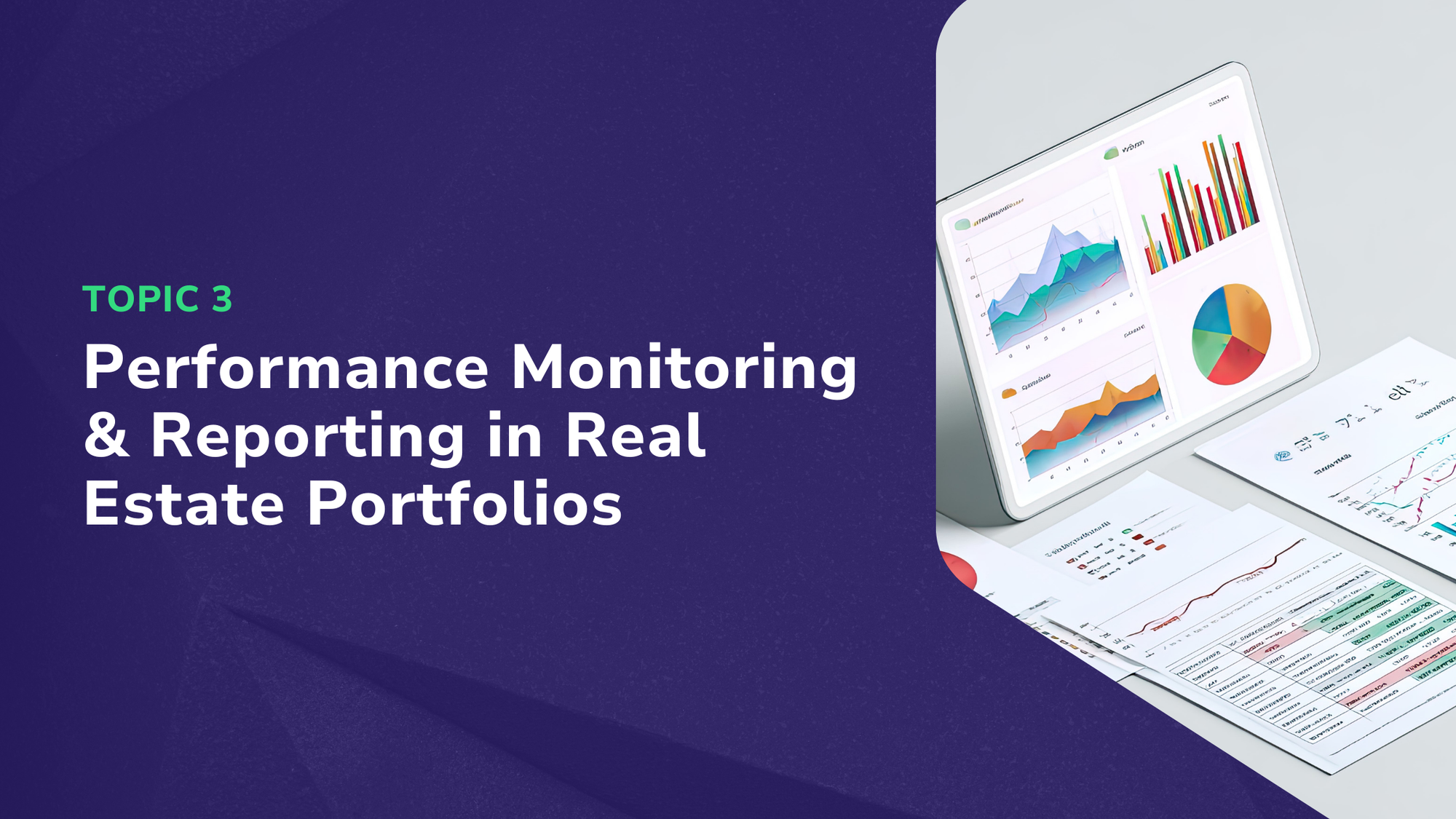
In recent years, technology-driven dashboards have become increasingly valuable, allowing investors and managers to track key performance indicators in real time across multiple assets. Benchmarking is also widely used, enabling portfolios to be compared against similar properties or market averages to identify whether performance is strong, average, or lagging.
Reporting Best Practices
Reporting is not just about frequency, but also about clarity and presentation. Quarterly reports are the standard for institutional investors, while monthly updates may be provided for particularly active deals. However, the value of reporting lies in how easily the information can be understood. Using plain language alongside technical metrics ensures accessibility, while visualisations such as charts, graphs, and infographics make data more digestible.
Comparative analysis is another best practice. Rather than presenting only snapshots, good reporting shows trends over time, allowing investors to see whether income, returns, or operational performance are improving, declining, or remaining stable. For instance, a RealVantage quarterly investor report might include a breakdown of NOI trends, updated IRR projections, occupancy changes, and commentary on prevailing market conditions.
How RealVantage Delivers Transparency
At RealVantage, performance monitoring and reporting are central to investor engagement. Reports are designed to be clear, concise, and data-driven, while still including qualitative commentary on market trends and asset-specific developments. The goal is not only to present numbers but also to explain what they mean, highlight emerging risks, and identify opportunities.
By enabling investors to track progress toward projected returns in real time, RealVantage ensures that transparency is maintained throughout the investment lifecycle. This proactive approach builds confidence and strengthens the relationship between investors and managers.
Next in the Series
📖 Read next: Active vs Passive Management in Real Estate Investing — Understand how management style impacts portfolio performance.
About RealVantage
RealVantage (operating as RV SG Pte. Ltd. in Singapore) is a leading real estate co-investment platform, licensed and regulated by the Monetary Authority of Singapore (MAS), that allows our investors to diversify across markets, overseas properties, sectors and investment strategies.
The RealVantage team comprises professionals across real estate, corporate finance, technology, venture capital, and startup growth. The platform combines institutional deal sourcing with structured underwriting and portfolio diversification capabilities. The team is led by a distinguished Board of Advisors and advisory committee who provide cross-functional and multi-disciplinary expertise to the RealVantage team.
The company's philosophy, core values, and technological edge help clients build a diversified and high-performing real estate investment portfolio.
Get in touch with RealVantage today to see how they can help you in your real estate investment journey.
Disclaimer: The information and/or documents contained in this article do not constitute financial advice and are meant for educational purposes. Please consult your financial advisor, accountant, and/or attorney before proceeding with any financial/real estate investments.