
What is Institutional Real Estate?
Learn what institutional real estate is, how it works, and why it matters to investors. Discover how RealVantage opens access to institutional-grade properties globally.


Introduction
Institutional real estate might sound like an exclusive club for pension funds, REITs, and billion-dollar portfolios, but it’s more than that. It’s a cornerstone of global property markets, influencing how cities develop, how capital flows across borders, and how investors access stable, large-scale opportunities.
In Singapore and across Southeast Asia, institutional real estate plays a significant role in economic growth, urban transformation, and long-term wealth creation. With the right platform, even individual investors can gain access to these high-quality assets.
Defining Institutional Real Estate
Institutional real estate refers to large-scale, high-quality properties owned or managed by professional investment institutions. These assets are typically:
- High-value – often worth hundreds of millions of dollars.
- Prime location – situated in central business districts, industrial hubs, or strategic growth areas.
- Professionally managed – backed by expert asset managers, ensuring efficiency, compliance, and optimal returns.
Key Characteristics of Institutional-Grade Assets
- Scale & Value – Much larger than properties typically owned by individual investors.
- Quality & Compliance – Built to meet stringent construction, safety, and environmental standards.
- Long-Term Tenancy – Often leased to creditworthy, multinational corporations.
- Diversification Potential – Spread across multiple geographies and sectors.
- Lower Volatility – Historically less affected by short-term market fluctuations compared to smaller retail investments.
Who Invests in Institutional Real Estate?
Institutional investors pool large amounts of capital from many sources to acquire and manage properties. Examples include:
- REITs (Real Estate Investment Trusts) – Listed or private vehicles that own and operate income-producing properties.
- Pension Funds – Manage retirement savings and allocate a portion to real estate for stable, long-term returns.
- Sovereign Wealth Funds – Government-owned investment funds targeting global property markets.
- Insurance Companies – Invest premiums in stable assets to match long-term liabilities.
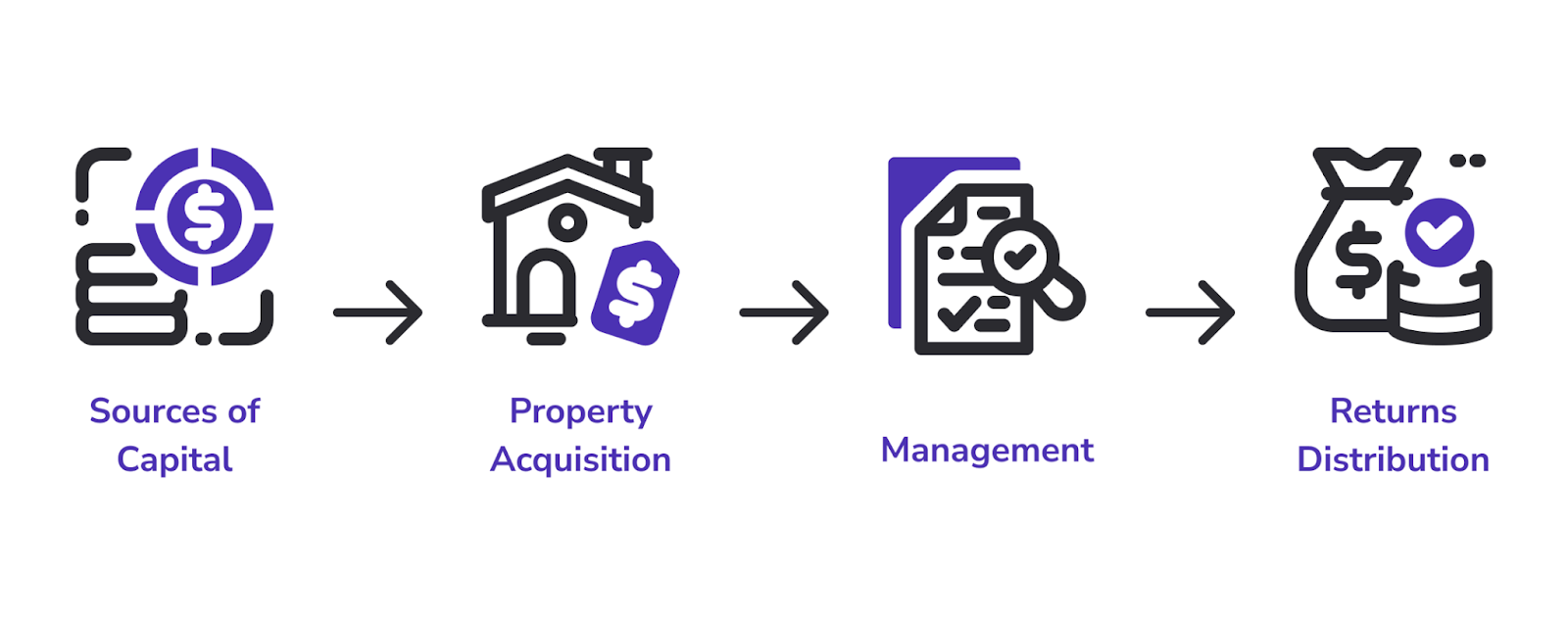
Why Institutional Real Estate Matters to Investors
- Stable Returns – Long-term leases with strong tenants can offer predictable income.
- Inflation Hedge – Rental income and property values often rise with inflation.
- Professional Management – Removes the burden of hands-on property management.
- Global Diversification – Exposure to different economies and market cycles.
How RealVantage Opens the Door
At RealVantage, we believe institutional real estate shouldn’t be out of reach for individual investors. Our platform provides:
- Access to opportunities across 20+ cities in 7 major markets (AU, HK SAR, NL, SG, KR, UK, US).
- Rigorous due diligence and deal vetting to ensure quality.
- Transparent reporting and professional asset management.
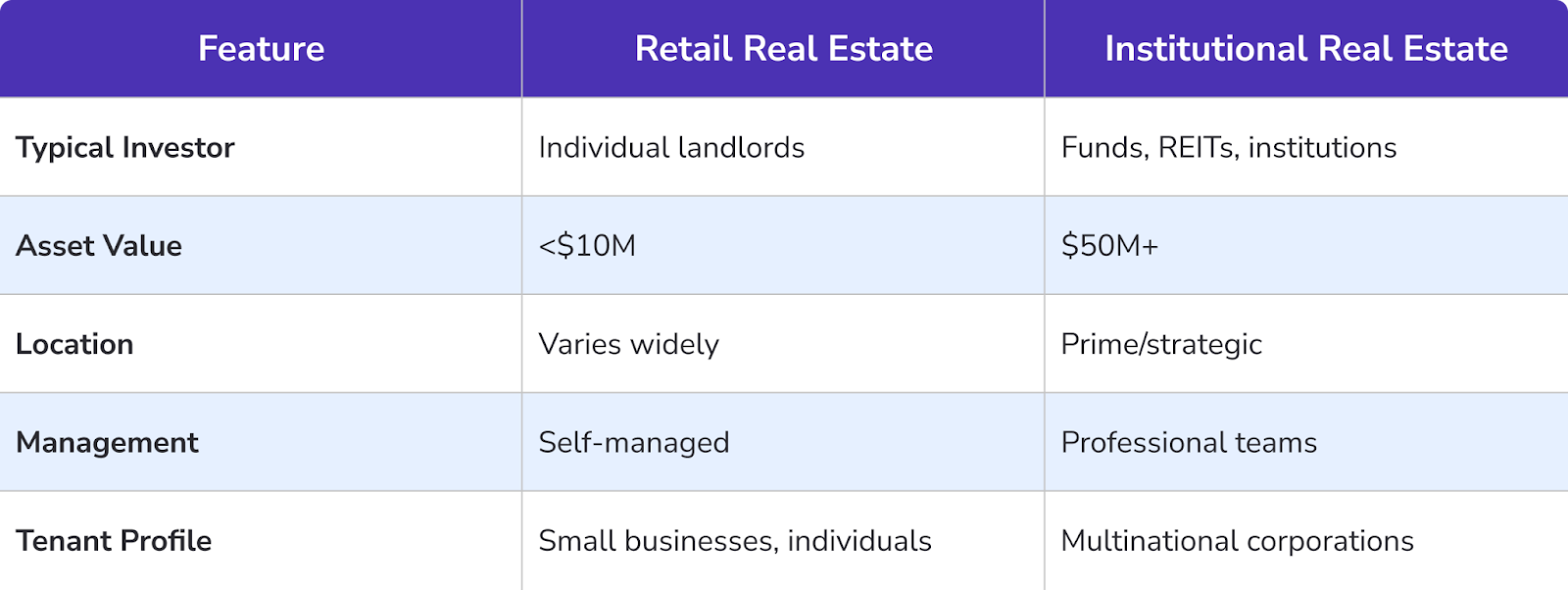
Retail vs Institutional Real Estate (Quick Comparison)
Next in the Series
📖 Read next: Institutional vs Retail Real Estate Investments — A detailed breakdown of how these two worlds differ and what it means for your portfolio.
Disclaimer
This article is for informational purposes only and does not constitute investment advice. All investments carry risks, including the potential loss of capital. Past performance is not indicative of future results. Investors should conduct their own due diligence and seek professional advice before making investment decisions.